

Semiconductor-Grade Ozone Generator Market Reaches $104M as Domestic Standards Drive Industry Growth
China's first semiconductor-grade ozone generator technical standard was officially released and implemented in December 2025. This marks a major milestone for domestic semiconductor equipment development.
The standard, designated T/CIET 1946-2025, was developed through collaboration among industry partners including equipment manufacturers and end users. For the first time, semiconductor fabs and equipment suppliers have a unified technical framework for evaluating ozone generator performance and reliability.

Why This Matters for Semiconductor Manufacturing
Ozone plays an increasingly critical role in semiconductor fabrication. It is used extensively in thin-film deposition, wafer cleaning, and photoresist removal processes where precision and purity directly impact chip yields.
Semiconductor-grade ozone equipment generates ultra-high concentration, ultra-pure ozone that enables nanoscale uniform oxide layer formation. In advanced applications, a semiconductor ozone generation system can produce 300 mg/L ozonated water that removes 0.2μm thick photoresist within 90 seconds.
The Economic Impact
The numbers explain why this market is attracting investment. Global semiconductor ozone generator market was valued at $104 million in 2025 and is projected to reach $160 million by 2032, growing at a 6.5% CAGR.
For domestic semiconductor manufacturers, the new standard addresses a long-standing gap. Ozone technology directly impacts fabrication yields. One published case shows that introducing ozone water processing at a 28nm node improved yield by 2.8%, reducing annual losses while cutting chemical costs by 65%.
Advanced ozone generation systems now enable higher concentration output with lower power consumption, making them viable for large-scale semiconductor manufacturing operations that require continuous, reliable performance.
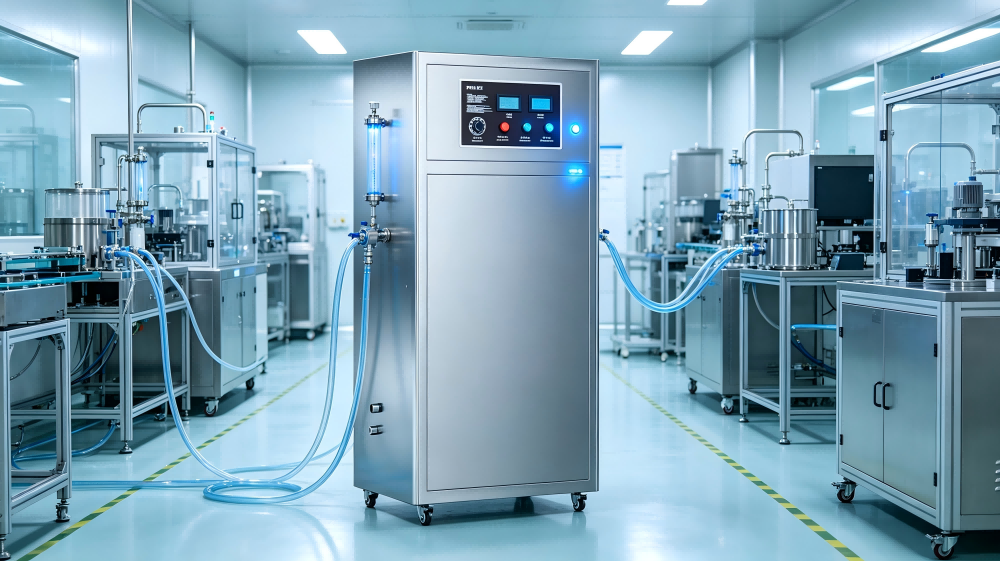
Where Ozone Is Used in Semiconductor Manufacturing
Thin-film deposition (ALD/CVD). Ozone serves as an oxidation source for forming uniform oxide layers at the atomic level. In advanced memory chip structures, ozone meets the stringent requirements for precision, defect control, and material compatibility.
Wet and dry cleaning. Ozone removes organic contaminants from wafer surfaces without leaving chemical residues, making it a cleaner alternative to traditional wet chemistry.
Surface treatment. Ozone oxidizes and modifies semiconductor surfaces to prepare them for subsequent processing steps.
Photoresist stripping. Ozone removes photoresist layers after etching or implantation processes.
Who Is Driving This Market
Key industry players in the semiconductor ozone space include established equipment manufacturers and emerging domestic suppliers. The 2025 standard development itself brought together equipment makers and end users, ensuring scientific rigor and broad industry representation.
High-purity industrial applications now represent a strategic growth axis for ozone generation. Semiconductor fabs use ozone for wafer cleaning and photoresist stripping with demand for redundant systems, real-time monitoring, and service contracts shifting competition toward lifecycle support rather than equipment pricing.
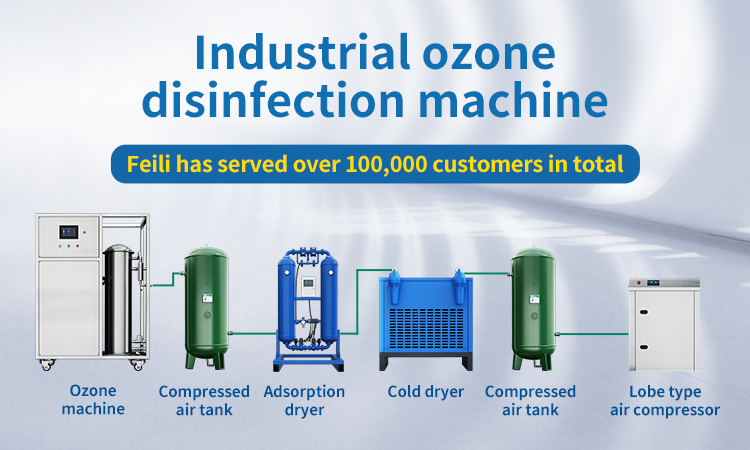
FEILI Positioning
FEILI Electric supplies Industrial Ozone Generator systems for semiconductor, photovoltaic, and panel display applications. Our Ozone Machine for Water Treatment technology supports high-purity process water requirements in semiconductor fabs.
FEILI's Ozone Disinfection Machine and Ozone Generator Machine lines are built with 304 stainless steel and CE certification, serving industrial clients in over 130 countries. Our engineering team can help specify ozone systems that meet the demanding purity and reliability requirements of advanced manufacturing environments.
Looking for a reliable ozone system for high-purity applications? Contact FEILI. Our team can help you specify equipment that meets the demanding requirements of advanced manufacturing.
