

Not every ozone application produces the same amount of residual gas, so the need for off-gas destruction depends on system design, ozone dosage, contact conditions, ventilation, and whether the treated gas can be safely contained. In enclosed industrial systems, however, untreated ozone off-gas should never be released simply because the treatment cycle has finished.
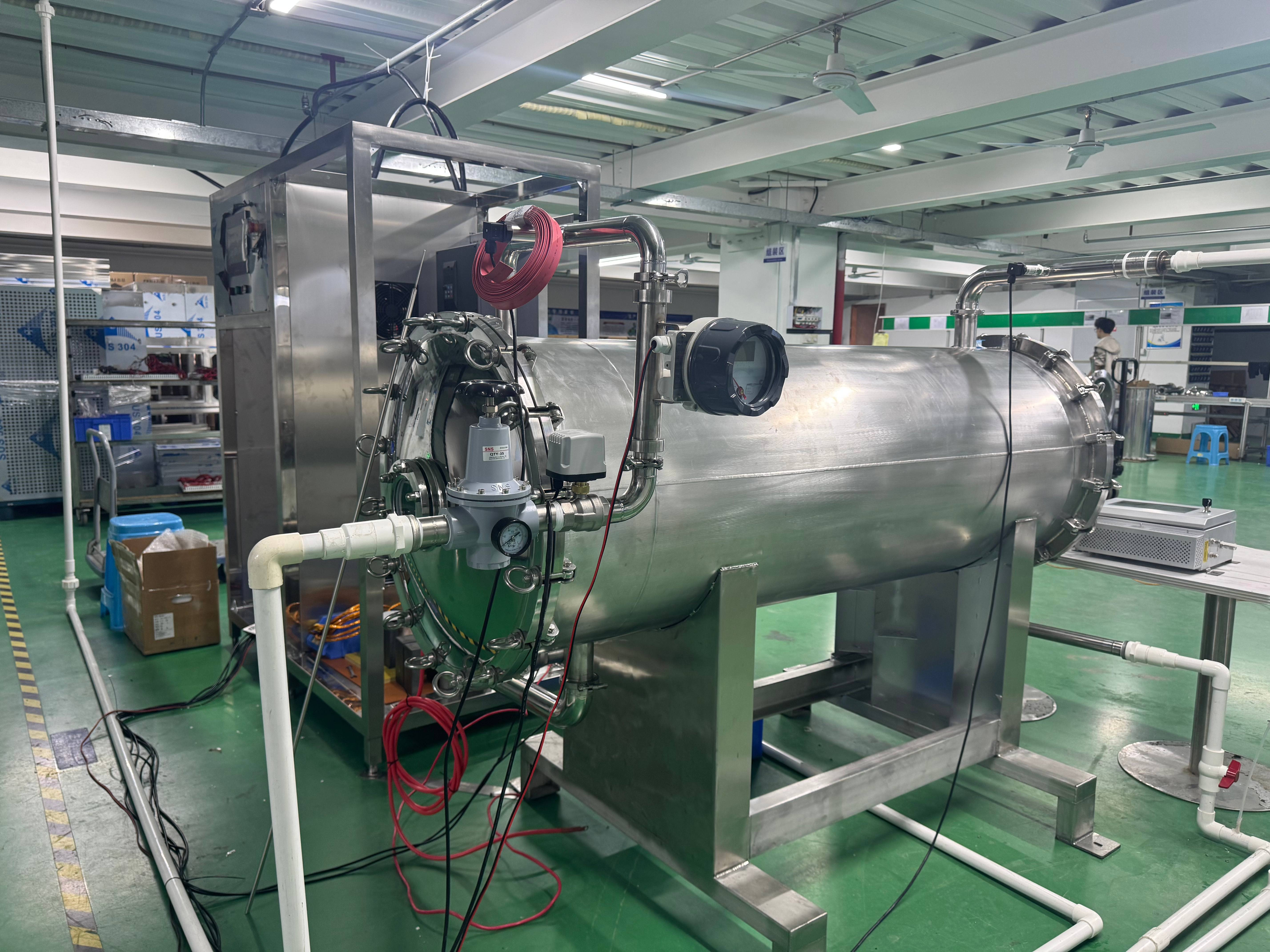
Where Does Ozone Off-Gas Come From?
Ozone is normally injected into water or another process stream, where part of the gas reacts with contaminants and part dissolves into the liquid. The remaining gas leaves the contact vessel as off-gas. EPA technical guidance for ozone disinfection states that off-gas from contact chambers must be treated to destroy remaining ozone before atmospheric release.
This becomes especially relevant in water treatment plants, food processing facilities, aquaculture systems, and other installations operating higher-capacity ozone equipment.
What Does An Ozone Destructor Do?
An Ozone Off-Gas Destructor converts residual ozone into oxygen before the gas is discharged. Depending on the system, thermal or catalytic destruction technologies may be used. EPA engineering guidance describes thermal destruction as one established approach, with higher destruction efficiencies achieved when temperature and residence time are properly controlled.
The destructor therefore forms the final control stage after ozone generation, injection, mixing, and contact.
Why Off-Gas Safety Should Be Designed Early
Ozone has a strong odor and can irritate the respiratory system at elevated concentrations. OSHA specifies a workplace 8-hour time-weighted average limit of 0.1 ppm. EPA also warns that ozone-generating equipment can produce concentrations above levels considered harmful to human health under certain conditions.
Effective Ozone Off-Gas Safety therefore requires more than installing a destructor. The complete system should consider closed contact vessels, appropriate piping materials, ventilation, monitoring, emergency procedures, and controlled gas discharge.
Matching Destruction Capacity To The Process
Destructor capacity should be selected according to ozone production, gas flow, operating pressure, contact efficiency, and expected residual concentration. Oversizing or undersizing the destruction stage can both create problems: insufficient capacity may allow residual ozone to escape, while unnecessary capacity can increase equipment and energy costs.
Feili's ozone equipment solutions cover water treatment and industrial applications where stable ozone generation must work together with effective gas handling. Components such as Ozone Gas-Liquid Mixers can improve ozone transfer efficiency, reducing the amount of unused ozone entering the off-gas line.
Important Design Points
- Calculate maximum ozone off-gas flow rather than average production only.
- Consider the highest expected operating load.
- Use ozone-resistant materials for gas-contact components.
- Provide suitable monitoring before and after the destruction stage.
- Allow safe access for maintenance and inspection.
For larger installations, Ozone System Parts should be selected as part of the complete process rather than as isolated components. Gas transfer, contact time, residual ozone, ventilation, and destruction capacity are closely connected.
When Is Destruction Usually Recommended?
Off-gas destruction is particularly important when ozone is generated in enclosed facilities, when contact tanks are covered, when workers are nearby, or when residual gas cannot be safely contained and vented. Open, low-output applications may follow different engineering requirements, but the risk assessment should always consider the actual ozone concentration and operating environment.
A properly engineered Ozone Gas Detector can provide an additional safety layer around equipment rooms and potential leakage points. Combining gas monitoring with appropriate off-gas destruction gives operators a clearer way to identify abnormal conditions and maintain controlled operation.
Effective ozone treatment is not only about producing sufficient ozone. Safe gas handling is equally important. A correctly sized destructor, suitable materials, reliable monitoring, and controlled ventilation allow industrial ozone systems to deliver oxidation and disinfection performance while keeping residual ozone under proper control.
