

Food Safety Regulations Drive Food Grade Ozone Generator Market to $106M by 2032
EU Regulation 2073/2025 takes effect July 2026. Food processors are racing to eliminate chemical residues. Ozone is becoming the preferred solution.
The global food grade ozone generator market is valued at $84.5 million in 2025 and projected to reach $106 million by 2032, growing at a 3.8% CAGR . Europe leads adoption, driven by the EU's new zero-tolerance Listeria regulation taking effect July 2026 .
Why Food Processors Are Switching
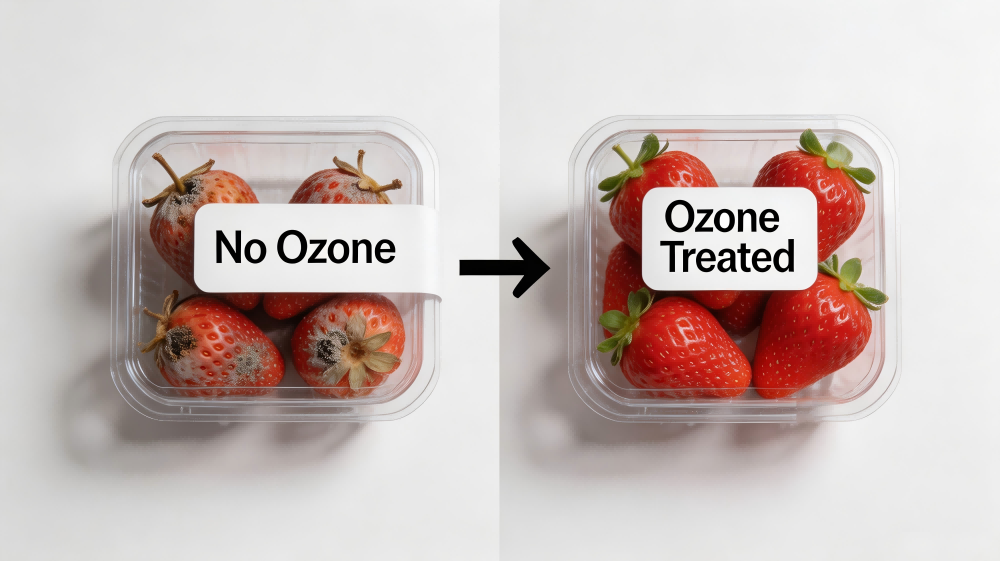
Traditional chemical sanitizers leave residues. Chlorine, peracetic acid, and quaternary ammonium compounds require rinsing. They also create hazardous waste streams.
Ozone works differently. It kills pathogens on contact, then decomposes to oxygen. No chemical residue. No rinsing. No storage of hazardous materials.
Research confirms ozone's effectiveness. A 2026 study on refrigerated grass carp fillets found that ozonated water treatment significantly reduced microbial diversity. Pseudomonas, Shewanella, and Aeromonas were identified as the dominant spoilage organisms, with Pseudomonas helmanticensis showing the strongest spoilage potential. The study also established that a 7.62 log₁₀ CFU/g Pseudomonas count represents the sensory spoilage threshold, and the resulting shelf-life prediction model achieved relative error below 2% .
Another industry source reports that ozone kills bacteria 3,000 times faster than chlorine and leaves no chemical residue .
Cold Storage and Shelf Life Extension
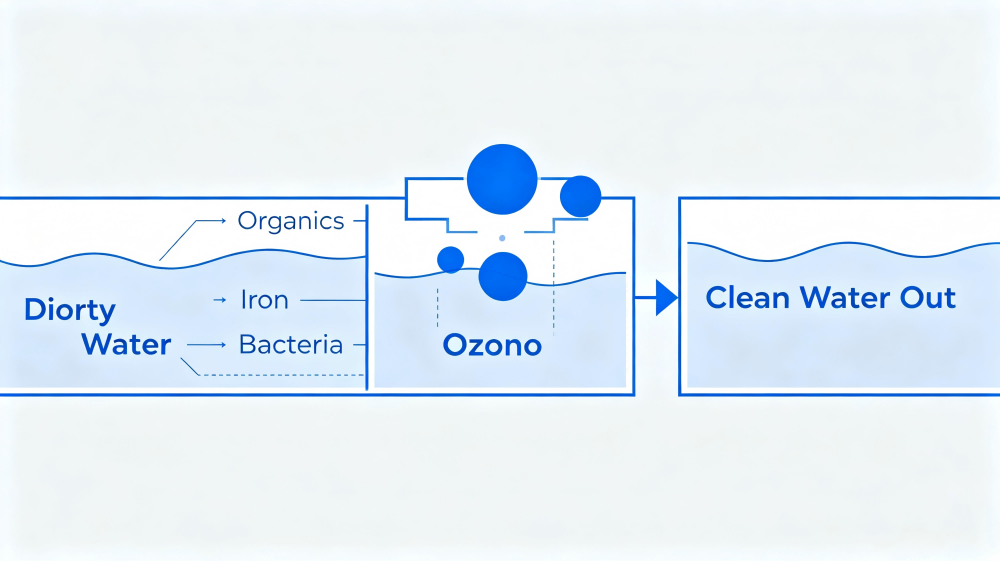
Cold storage facilities are major adopters of ozone technology. Ozone systems provide continuous protection against bacteria, mold, and biofilm formation in ice machines and cold storage rooms .
For produce storage, ozone oxidizes ethylene gas, the compound that triggers ripening. This extends shelf life without chemical preservatives. A book on sustainable postharvest handling includes dedicated chapters on ozone treatment for fresh produce quality and safety .
Food processors also use ozone for:
-
Processing area sanitation
-
Cold storage mold control
-
Packaging zone disinfection
-
Water system treatment
-
Food waste area odor management
What Buyers Need to Know
Size matters. Ozone output must match treatment area volume. Over-ozonation affects food quality. Under-ozonation is ineffective.
Material selection is critical. Food-grade ozone equipment must use 304 stainless steel and FDA-compliant components.
Safety protocols are essential. Ozone treatment should occur in unoccupied spaces with proper ventilation. Facilities need dedicated sensors and controlled access during treatment cycles .
FEILI Positioning
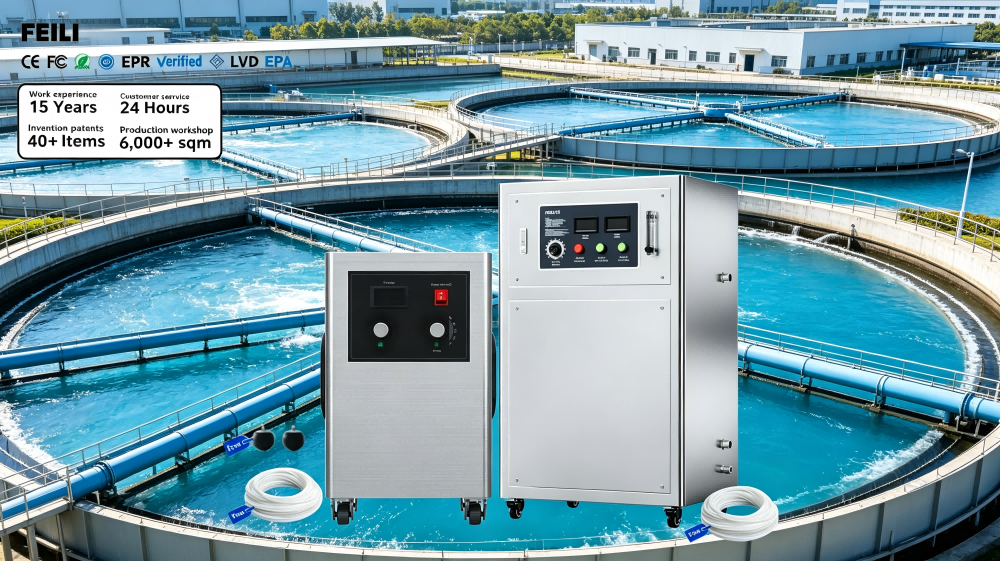
Since 2011, FEILI Electric has supplied Food Grade Ozone Machines to food processing facilities worldwide. Our systems meet CE standards and international food safety requirements.
FEILI's Food Sterilization Ozone Generators are built for food processing environments. 304 stainless steel construction. Precise concentration controls. Easy cleaning design.
For cold storage operators, FEILI's Ozone Sterilizers for Vegetable Fruit systems deliver 99.9% microbial reduction while extending shelf life by 30-50%.
All FEILI food-grade systems are powered by reliable Ozone Generator Machine technology, engineered for continuous operation in food processing environments.
Need a food-grade ozone system? Contact FEILI. We will help you design the right solution for your processing line.
