

A team of researchers from the Harbin Institute of Technology has published a groundbreaking study that changes how engineers understand ozone-based water treatment. The findings, accepted on May 16, 2026, in the journal Environmental Science and Ecotechnology (impact factor 14.3), reveal that the peroxone process—ozone combined with hydrogen peroxide—produces hydroxyl radicals at a yield of approximately 67%. This is significantly higher than the commonly assumed value of about 50% .
Why This Matters to You
For decades, water treatment engineers have relied on an incomplete understanding of how ozone reactions generate hydroxyl radicals (•OH). These are the highly reactive species that drive advanced oxidation processes—the chemistry that actually breaks down stubborn pollutants like pharmaceuticals, pesticides, and industrial chemicals.
The new research clarifies that the peroxone process is not simply an ozone-decomposition shortcut, but a finely balanced radical-generating process driven by competing molecular pathways. The study identified that ozone reacts with hydroperoxide ions through two nearly equal routes: electron transfer and oxygen atom transfer. This dual-pathway mechanism explains why peroxone chemistry produces more hydroxyl radicals than earlier models predicted .
What This Means for Your Facility
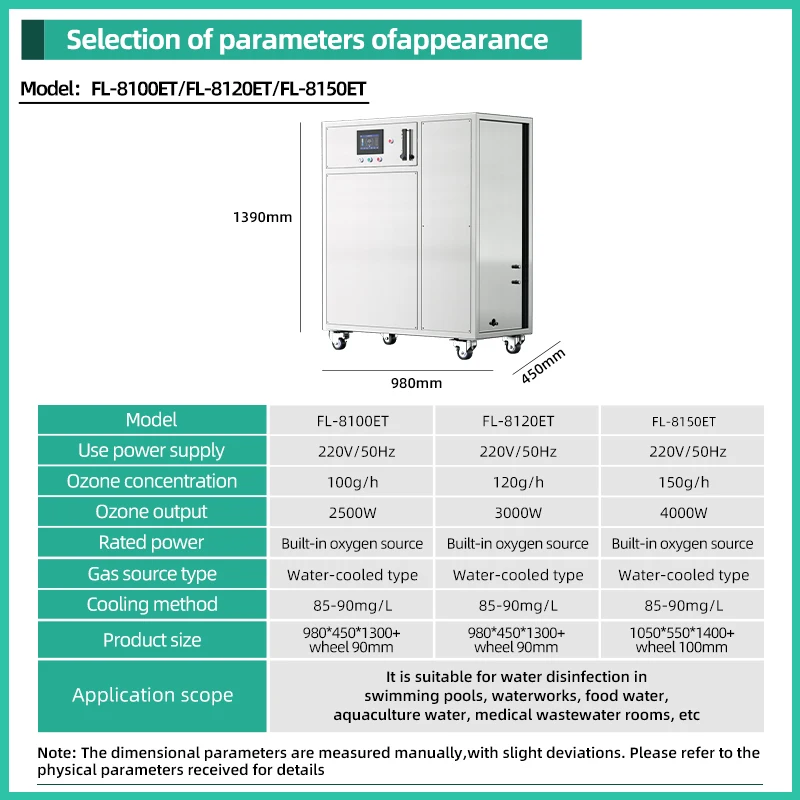
For a facility manager or engineer operating an Industrial Ozone Generator, this research has practical implications:
-
More accurate system design: The 67% hydroxyl radical yield provides a clearer benchmark for evaluating O₃/H₂O₂ systems. Engineers can now better estimate oxidant doses, reaction efficiency, and pollutant removal potential .
-
Better contaminant removal: Understanding the true radical yield helps optimize treatment for persistent organic pollutants that resist conventional oxidation.
-
Reduced chemical waste: Simply tracking ozone decay is not enough. Operators need to understand how much decay is converted into useful radical chemistry. This knowledge supports more efficient degradation while reducing unnecessary chemical use .
The Technical Breakthrough
The research team combined radical-capture experiments, competition assays, and quantum-chemical calculations to revise the mechanism of how O₃ and H₂O₂ initiate hydroxyl radical-forming chain reactions in water. Using probe compounds such as atrazine and p-chlorobenzoic acid, they measured how pH and H₂O₂ concentration affected ozone decay and pollutant degradation .
They found that while increasing pH and adding H₂O₂ both enhanced hydroxyl radical exposure, H₂O₂ was the more practical route under near-neutral water conditions—which is typical for most municipal and industrial water treatment applications.

Feili Electric: Turning Science into Solutions
At Feili Electric, we follow the science. Since 2011, we have been building Ozonator Machine systems that deliver reliable, efficient ozone generation for water treatment facilities worldwide. Our Ozone Machine for Water Treatment series is engineered with precision controls that allow operators to fine-tune ozone output for specific applications—whether you are treating drinking water, industrial wastewater, or cooling tower systems.
This new research reinforces what we have always believed: ozone chemistry is powerful when properly understood and applied. As the science advances, Feili ensures that our equipment keeps pace, giving our customers the benefit of the latest understanding in oxidation chemistry.
Looking Ahead
The study was supported by the National Natural Science Foundation of China and the State Key Laboratory of Urban-rural Water Resources and Environment . It represents a major step forward in making ozone-based treatment systems more predictable and efficient.
For B2B buyers evaluating an Ozone Generator Machine, this research provides confidence that the technology is built on a solid scientific foundation—and that understanding is only getting better.
